-
The Direct Answer: Is the OXO Tot Nest with Removable Cushion Worth It?
-
The Real Reason Safety Standards Keep Moving
-
The Hidden Value of a Removable Cushion
-
Matching the Seat to Your Child and High Chair
-
Booster Seat Safety Standards: A Timeline
-
Common Safety Myths That Put Kids at Risk
-
Final Verdict: Three Reasons to Choose It, With One Caveat
The OXO Tot Nest Booster Seat with Removable Cushion is worth buying—but the reason is narrower than the marketing suggests. Its value isn't just in meeting current safety standards; it's that the removable cushion allows you to clean the seat thoroughly every day, and that daily cleaning is what keeps the seat safe over time. In real use, a toddler's high chair collects food crumbs, milk spills, and sticky residue in every seam. On a fixed-cushion seat, that residue hardens, breeds bacteria, and can even break down the straps and padding materials—while staying completely out of sight. A seat can pass every lab test and still fail in your kitchen because maintenance was impossible. The Nest's design solves precisely that failure point. If your child eats in it daily, the removable cushion is not a convenience feature; it's the difference between a seat that lasts and one that quietly degrades.
The Direct Answer: Is the OXO Tot Nest with Removable Cushion Worth It?
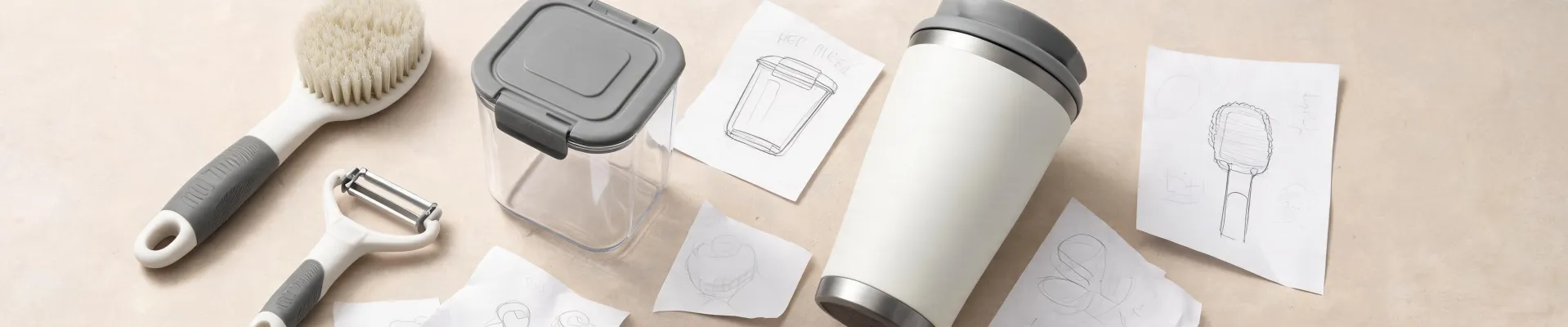
Why should a parent trust one booster seat over another? The first place to look is the brand's broader design philosophy. OXO's own website lists its product lines as Good Grips, Brew, Steel, and Tot—a clear signal that the company treats children's products as part of a larger family of carefully engineered tools. The Tot line inherits the same design language that made OXO's kitchen tools famous: a focus on comfortable, universal grip, and an emphasis on making products easier to use. That matters because a detachable cushion is exactly the kind of detail a universal-design brand would add, not as a gimmick but as a functional improvement. When you see the same company applying its ergonomic, user-friendly thinking to baby gear, the presence of a detachable cushion starts to look less like an optional extra and more like a commitment to long-term usability.
Look more closely at OXO's public pages and you'll see the same emphasis on thoughtful construction repeated across its product categories. For a booster seat, that translates into a cushion you can detach and wash without fighting with clips or tools. This is the verdict: the Nest's detachable cushion earns its place because it directly addresses the most common real-world cause of booster seat failure—uncleanable surfaces. Parents can actually reach the hidden areas where food and moisture accumulate, and that means the seat can be maintained in a way that a fixed-cushion seat cannot. So when you weigh the price against cheaper alternatives, remember that you're paying for the ability to preserve safety performance through regular cleaning. That's not a luxury; it's a maintenance requirement that many competing products make impossible.
The Real Reason Safety Standards Keep Moving
Safety standards for child restraints don't change on a fixed schedule—they change because the evidence about how products fail in real accidents is constantly evolving. New crash tests, updated research on child injury patterns, and changes in vehicle and high-chair designs all feed into the next version of the rules. That's why a booster seat certified five years ago may no longer represent the best protection available today. Parents who assume a one-time certification sticker is enough miss the dynamic nature of safety engineering. The standard today is not the standard forever, and the seat that was state-of-the-art when your first child was born might lag behind by the time your second child needs it.
There is even an industry-wide measurement method for assessing compatibility—the method for induction hobs, DOI 10.3403/30445162u—which illustrates how independent testing bodies keep updating their tools. Just as a dedicated measurement method helps compare cookware and hobs under controlled conditions, child safety standards are backed by similar mechanisms that get revised as methods improve. The key takeaway is that these mechanisms are not static. When you see a standard number with a year attached, treat it as a snapshot, not a permanent guarantee. A smart shopper looks for the most current version of the standard and checks whether the product was tested against it, because the industry's own machinery for evaluating safety is continuously refined.
The Hidden Value of a Removable Cushion
Most shoppers view a removable cushion as a cleaning convenience, but the hidden value is that it turns a passive safety device into one you can actively maintain. Think about what happens in the gap between the cushion and the seat frame. Food crumbs fall in, liquids seep under the padding, and before long you have a damp, dark environment where mold and mildew can take hold. On a fixed-cushion seat, that contamination builds up invisibly for months. It can degrade the foam, weaken the attachment points, and turn the cushion into a bacterial reservoir that touches your child's skin every meal. A detachable cushion interrupts that cycle by making the whole seat accessible to soap, water, and routine inspection. That inspection matters: you can see whether the padding is breaking down, whether the straps are fraying, or whether any moisture has stained the foam.
OXO's reputation for easy-to-clean products is well documented in independent comparisons. In a head-to-head review of food storage containers, the OXO Good Grips POP set scored 4.7 out of 5, praised for its airtight seal and easy cleanup, while the budget OXO SoftWorks line earned 4.5 for everyday leftovers. Those numbers matter because they show a consistent pattern: OXO designs for maintenance, not just for initial function. The same design philosophy—making it easy to wipe down, take apart, and keep hygienic—carries over to the Tot Nest's detachable cushion. The brand's track record across other product categories suggests that the cushion's removability is not an afterthought but a deliberate feature aligned with its engineering culture. When a company's other products are repeatedly lauded for cleanability, you can expect the same thinking in its child seats.
Matching the Seat to Your Child and High Chair
Even a well-engineered seat is the wrong choice if it doesn't fit your child and your dining setup. How do you know whether the Nest will suit your family? You have to check three things: the child's height and weight against the seat's published limits, the design of your high chair's seat and backrest, and how the booster's own strap system interacts with your chair's geometry. The age range printed on the box is only a rough guide; toddlers at the same age vary widely in size. A seat that's too small leaves gaps where a child can slide, and one that's too large defeats the purpose of confinement. The fit isn't just about comfort—it affects how well the restraint system works in a real fall or impact.
The evaluation is straightforward if you approach it systematically. First, weigh and measure your child and compare those numbers to the booster's weight and height limits, which you should find in the official specifications. Next, look at your high chair: the booster's base must rest level on the chair seat, and its strap hooks must reach your chair's attachment points securely. Some high chairs have unusually thick or rounded armrests that can interfere with the booster's fit; you need to test that. Finally, put the booster in place with your child and check for movement in all directions—especially whether the harness stays snug and cannot be pushed out of position. If any of these checks fail, the seat may be safe for another child or another chair, but not for yours.
Booster Seat Safety Standards: A Timeline
Safety standards for booster seats don't move on a predictable schedule, but looking at how similar product categories evolve gives parents a useful mental model. For food storage containers, independent reviewers at Serious Eats and Yahoo test top picks every year, and their recommendations shift as new materials and designs appear. The same pattern holds for child restraints: standards are revised when research reveals new risks or when the existing test criteria no longer predict real-world performance. You can expect a significant standard update every few years, with smaller clarifications in between. This means a booster seat purchased today may remain compliant for years, but its certification could become outdated if you plan to pass it down to younger siblings.
A concrete illustration of this cycle comes from that same industry: the 2026 update to Serious Eats' 'The 5 Best Food Storage Containers' includes top picks, test parameters, and lessons from the latest rounds of testing. That is the same rhythm you see behind safety standards: continuous testing, open comparisons, and revised recommendations. For a parent, the takeaway is to look for the most recent testing date on any product you consider. A model that was well-reviewed in an earlier edition of a standards round-up may no longer be the best option if a newer version addresses issues discovered since then. The timeline is not a single date; it's an ongoing series of checkpoints, and the strongest choices are those that stay close to the latest one.
Common Safety Myths That Put Kids at Risk
The most dangerous myth is that a removable cushion implies a weaker, less secure seat. Parents often look at a detachable pad and imagine a child pulling it off or the fasteners failing over time. In reality, mature designs use multi-point attachments that are difficult for a toddler to release and are engineered to stay locked during use. The removable feature exists for maintenance, not as a weak point. Another myth is that once a seat is installed correctly, you can forget about it. Every booster seat requires periodic checks—straps can loosen, buckles can jam, and cushions can wear. The detachable pad actually makes those checks easier, letting you inspect surfaces that a sealed design hides. The belief that 'one-time setup equals permanent safety' is what leads to failures well before the seat's intended lifespan.
Contrast that with the fixed-cushion alternative. A fixed cushion may feel more permanent the day you unbox it, but that permanence becomes a liability when you can't lift it to see what's underneath. Over months, unseen food and moisture can degrade the foam and fabric, and the strap slots can become clogged with dried residue that prevents the harness from sitting flat against your child. In a detachable-cushion design, you can wash the padding, wipe the frame, and confirm that the attachment points are still firm. This is not a marginal difference—it's the difference between a seat that stays in near-new condition and one that slowly accumulates hidden damage. When you compare the two side by side, the removable design doesn't sacrifice security for convenience; it actually enables the maintenance that keeps the security features working.
Final Verdict: Three Reasons to Choose It, With One Caveat
Three reasons make the OXO Tot Nest with removable cushion a standout choice. First, it simplifies daily cleaning, which is the single most important factor for maintaining hygiene in a toddler's eating environment. Second, it forces you, the parent, to regularly inspect the cushion, straps, and attachment points—a routine that catches wear before it becomes a safety issue. Third, the brand's track record in other categories suggests that the removable cushion is not a marketing gimmick but a feature backed by an engineering culture focused on usability and maintenance. Together, these reasons mean the seat is designed to stay safe, not just to be safe at the moment of purchase.
One caveat: this seat is only the right choice if you actually commit to using its detachable cushion as intended. The purchase decision should include a habit—after every meal while the child is changing or after a particularly messy feed, pull the cushion, wash it, and wipe down the frame. If you're not prepared to do that, a fixed-cushion seat might still suit you, though you'll be trading away long-term maintainability. The decision rule is simple: buy this seat if you want a booster that can be kept genuinely clean for years, and if you accept that regular maintenance is part of the safety equation. If you prioritize it, the Nest delivers on that promise; if you don't, no seat can compensate for neglect.
In the end, the OXO Tot Nest with removable cushion earns its place in your home not because it has the newest certification, but because it lets you keep that certification meaningfully active. Every time you take off the cushion and see a clean, dry surface underneath, you're doing the one thing that prevents the seat from becoming a quiet hazard. That is the verdict: buy it for the daily ritual of cleaning, because that ritual is what preserves the safety you paid for. A fixed-cushion seat can't give you that; this one can. The decision is yours, but the maintenance arithmetic is clear.