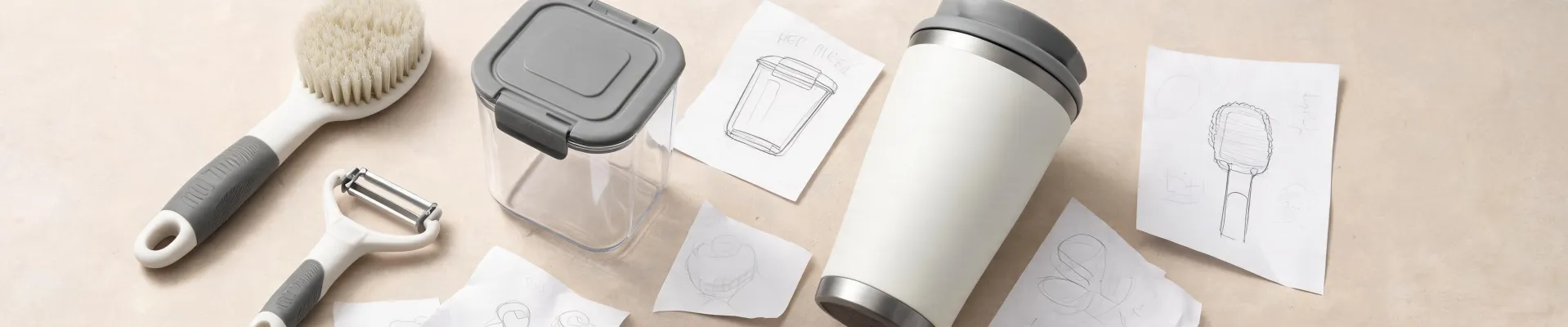
When dust settles into your phone's earpiece and your keyboard's crevices, an old toothbrush feels both too stiff and too coarse. A makeup brush is soft enough but too floppy to reach deep grooves. Compressed air scatters the grit into the air, and it lands right back. That's the moment a dedicated electronics cleaning brush stops being an optional gadget and becomes the obvious tool for the job. In this buying case study, we'll walk through whether OXO Good Grips—a brand better known for kitchen tools—actually makes a brush worth choosing over a dollar-store alternative.
When Dust Takes Over Your Desk
You're at your desk on a Saturday morning, laptop open, and the space between the keys has turned into a tiny dust trap. You try a toothbrush, but its bristles are too hard and leave faint scratches on the plastic. A cosmetics brush glides over the surface without moving the packed dust. Even a can of compressed air only pushes the debris deeper into the switch housings. What you need is a brush with bristles soft enough to avoid damage, yet stiff enough to sweep out the grit, and a head slim enough to slide between keys and into the small ports on the side of the machine.
Here's the question that follows: why would anyone pay $15 or more for a brush that looks almost identical to a $3 craft brush? Is there an actual difference in cleaning performance, or are you paying for a brand name and a fancy handle? The stakes aren't high—a brush is cheap—but the risk of scratching a $1,000 phone or laptop is real. If a soft brush can't remove caked dust, and a hard brush damages surfaces, then the middle ground requires careful specification. This guide breaks down what to look for so you can decide without guessing.
I'm not going to tell you to buy a specific model based on marketing claims. Instead, we'll build a checklist—bristle tip shape, head geometry, handle ergonomics, and cleaning efficiency—and then apply it to OXO's lineup and the alternatives. By the end, you'll have a rule you can use for any cleaning brush, not just this brand. That way, whether you choose OXO or an off-brand, the decision rests on evidence rather than impulse.
OXO Good Grips: A Cleaning Line You Might Have Overlooked
OXO Good Grips is a name most people associate with kitchen tools—peelers, measuring cups, and salad spinners. The brand built its reputation on comfortable, well-thought-out handles and user-friendly design. But the company's own website lists a whole category called 'Cleaning & Organization,' which includes brushes, dustpans, and other household tools. For a buyer looking for an electronics cleaning brush, that category is a signal that cleaning is a serious part of OXO's product line, not an add-on.
On the official OXO site, the navigation menu shows 'OXO Good Grips, Brew, Steel, Tot' and then a panel labeled 'Cleaning & Organization' beneath the back-to-previous-category link. That placement tells you cleaning tools are a formal product family, not a side venture. The same page also mentions free shipping over $49, which suggests the category carries enough inventory to be worth promoting. There's no direct listing for an electronics cleaning brush in the excerpt we have, but the existence of the category gives the brand credibility when you're evaluating whether it might make a suitable tool.
Good Grips, as the name implies, focuses on handles that fit the hand naturally and reduce fatigue. If that philosophy carries into a cleaning brush, you'd expect a comfortable grip that lets you apply controlled pressure without cramping. That could be genuinely useful when you're working on a fine task like cleaning a phone mesh. But design philosophy alone doesn't guarantee a brush is suited for delicate electronics—bristle stiffness and tip shape still matter more than the handle. So while the ergonomic promise is appealing, it's not the deciding factor.
What Actually Matters in an Electronics Cleaning Brush
Before comparing candidates, you need a set of criteria that separates a useful electronics brush from a useless one. Four attributes matter most. First, bristle softness—too hard and you scratch, too soft and you can't shift dust. Second, tip shape—round-tipped bristles are gentler than flat-cut ones. Third, head geometry—the brush must reach into narrow gaps like keyboard seams and speaker grilles. Fourth, handle ergonomics—a good grip gives you control. These four dimensions let you compare any two brushes fairly.
The most overlooked detail is bristle end treatment. A brush with cut-flat bristles has sharp edges that can micro-scratch plastic and metal, while round-tipped bristles slide over surfaces without digging in. But you also don't want bristles that are too soft; they'll just bend around the dust and leave a clean-looking but still-clogged gap. The ideal brush has medium-stiff bristles with rounded tips, arranged in a taper or angled shape to concentrate pressure where you need it. For keyboards and ports, a narrow, slightly pointed head outperforms a wide flat brush because it can insert into the crevice.
Once you have the criteria, the method is simple: test each candidate in the same way. You can learn from how OXO's storage containers were compared against Rubbermaid—reviewers scored seal quality, stacking, visibility, and value. For brushes, you'd score bristle tip roundness, head reach, handle comfort, and cleaning result. A comparison that relies on the same metrics for every product is more reliable than one that changes the goalposts. That structured approach is exactly what we'll apply to OXO versus the cheaper alternatives.
OXO vs. the Alternatives: A Buyer's Case Study
Now put yourself in a real buying scenario. You're standing in a home goods store, holding three options: a dedicated OXO electronics cleaning brush (if your store carries it), an old toothbrush from your bathroom, and a synthetic brush from the art supply aisle. The toothbrush is free, the art brush costs about $4, and the OXO might run between $10 and $20. On paper, the toothbrush wins on price. But price is the weakest reason to choose a tool for delicate electronics. The real question is whether the more expensive option performs meaningfully better where it counts.
Here's the key evidence: OXO Good Grips products have scored well in independent comparisons—for example, the OXO Good Grips POP Container Set earned a 4.7/5 in a side-by-side test against Rubbermaid, with reviewers praising seal quality and ease of use. That tells you OXO understands how to design functional products that hold up in daily use. But that test was for food storage, not brushes. It's an indirect signal of brand quality, not proof that every OXO item is equally well-suited to electronics. So while the score raises confidence, it doesn't replace checking the bristle specifics.
If the OXO brush arrives with round-tipped, medium-stiff bristles and a narrow head that fits into a phone earpiece, then the premium price buys real function. If it instead has generic flat bristles and a wide head, you're paying extra for the logo. The toothbrush, by comparison, has stiff, often flat-cut bristles that can scratch, but it's free. The art brush might be soft and floppy, useful for dusting but useless for grinding in. So the conditional verdict is: buy OXO only if it meets the criteria; otherwise, save your money.
Should You Buy It? The Rule That Settles It
The decision rule is simple: ignore branding and look at three things—bristle tips, head shape, and handle comfort. If a brush has rounded bristle ends, a head that reaches into grooves, and a grip you can control, it's worth its price regardless of the name on the handle. If it doesn't, the brand won't save it. OXO's reputation and its strong record in other categories earn it a place on the shortlist, but they don't guarantee that a specific model is right for your keyboard and phone.
This rule also defines the boundaries. For cleaning out a laptop keyboard and the mesh of a phone speaker, a dedicated brush with a pointed head will outperform a generic brush. For broad surfaces like a monitor screen, a soft microfiber cloth is still the better tool—a brush just pushes dust around. And if your device is already clogged with sticky debris, a brush alone won't fix it; you'll need a safe solvent and a careful hand. So the OXO brush, or any brush that meets the criteria, is part of a kit, not the whole solution.
Back to that Saturday morning at your desk. This time, you're holding a brush with rounded tips and a narrow head that slides cleanly between the keys. The dust lifts away in one pass, and you don't wince wondering about scratches. That's the moment when the extra few dollars stop mattering—you've matched the tool to the task. The rule you now have is portable: apply it to any cleaning brush you pick up, whether it's OXO or a store brand, and you'll make the right call every time.