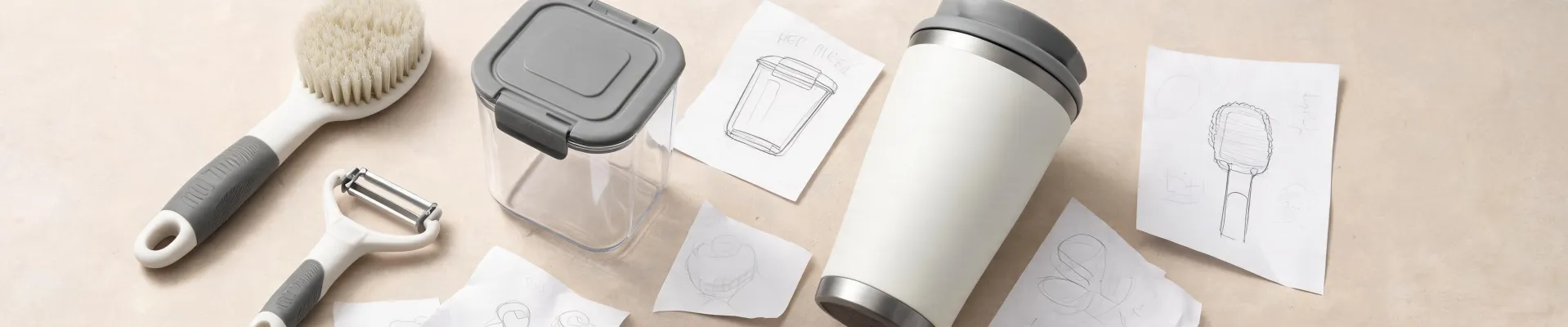
On a Saturday morning, you are finally sorting the pantry shelf that has become a catchall. Tucked behind the paper bags is a stack of old Anchor Hocking plastic containers—cloudy round tubs with pale lids, a couple of rectangular ones, each printed with a name your grandmother would recognize. The lids still click into place, but the plastic feels less crisp near the rims than it once did, and one lid carries a dull streak from years of dishwasher heat. Beside them sit three modern glass containers waiting for school lunches. For the moment, the old set looks both out-of-date and oddly beloved. The question is whether it deserves a place too—or whether charming plastic from another era belongs anywhere near flour, rice, or tonight's leftovers.
Saturday, the crowded pantry: when vintage meets modern expectations
On a Saturday morning, you are finally sorting the pantry shelf that has become a catchall. Tucked behind the paper bags is a stack of old Anchor Hocking plastic containers—cloudy round tubs with pale lids, a couple of rectangular ones, each printed with a name your grandmother would recognize. The lids still click into place, but the plastic feels less crisp near the rims than it once did, and one lid carries a dull streak from years of dishwasher heat. Beside them sit three modern glass containers waiting for school lunches. For the moment, the old set looks both out-of-date and oddly beloved. The question is whether it deserves a place too—or whether charming plastic from another era belongs anywhere near flour, rice, or tonight's leftovers.
You lift the round tub with the tightest lid and rest it in the crook of your arm; it looks like the kind of thing a neighbor would send you home with after dinner. Fill it with rolled oats, and it seems fine. Fill it with soup meant for the microwave, and suddenly the same container feels like an uncertain bet. Online searches pull up glass sets from the same brand, not old plastic ones, so you cannot shake the thought that these relics belong in a memory box. The tension is practical, not sentimental: if the plastic is safe enough for pasta but not for tomato sauce, how would you ever remember which duty it can handle? That question is what makes the pile sit there while the cabinets get organized around it.
The stakes are small enough to ignore and large enough to matter. Keep them and you gain free storage for dry goods—beans, pasta, baking supplies—and lose nothing but shelf space. Replace them and you spend money on something tested, usually with little prospect of the sentimental payoff. But the actual risk is not in the decision to keep; it is in using one for the wrong job. Reheat leftover chili in a scratched plastic tub whose only history is unknown, and the consequence is not a lecture from a brand, it is a food-safety gamble. Discard all of them, though, and you forfeit useful organization for no good reason. So the real work is more fine-grained than a yes-or-no vote: it lies in sorting the stack by lid condition and by what each container will carry.
What the Anchor Hocking name really promises
The brand gives you a clearer story than its plastic tubs do. Anchor Hocking describes itself as the company that began in 1905 with a simple goal: make the glass that homes really need. An encyclopedia entry confirms that it is an American manufacturer of glassware and other consumer products based in Lancaster, Ohio. That heritage is real, but watch where the company points you today. Its official site sells beautiful shapes and leak-proof lids for a sparkling, organized kitchen, and its higher-profile storage products come with locking lids and tempered glass—including a TrueLock bake dish with an insulated tote meant to keep food hot or cold in transit. So when you encounter the old plastic set, the brand name is doing two jobs at once: it authenticates the container's lineage, yet it stands a century away from the product category those tubs represent. The name tells you where Anchor Hocking's care has always gone—glass—not what condition this particular plastic is in.
Independent reviewers define the bar your modern replacement would have to clear, and it has nothing to do with nostalgia. In 2026 roundups, testers describe evaluating more than 50 food storage containers, saying the ones that stand out are leakproof, easy to clean, and durable; they check whether food stays fresh for days without staining and whether lids stay sealed when shoved into a tote. The same reviews point to containers that are microwave-, oven-, and freezer-safe and name a glass set from Rubbermaid's Brilliance line as the top pick, with its lighter plastic sibling also praised for secure snap-on lids. These criteria matter because they make the standard visible: a container earns a recommendation by resisting leaks and temperature swings and by surviving daily cleaning, not by looking pretty on a counter. For an inherited plastic tub with no label, none of these properties can be confirmed, which is exactly why the comparison feels unfair—the old set is charming but undocumented.
Even the modern benchmark has trade-offs. A careful review of Rubbermaid Brilliance, the clear plastic line many shoppers choose when they reject the cheapest twenty-dollar sets, notes that the units are airtight, microwave-safe, shiny, and easy enough to clean, yet scratch easily and collect grime in the creases around their lids. Those flaws are not necessarily deal breakers, but they stop you from treating replacement as a perfect answer. You are ultimately choosing between documented annoyances and undocumented unknowns: a new tub's lid grooves you can read about before purchase, while an old container's behavior under heat, grease, and repeated washing is a blank page. That is the comparison in miniature. Modern storage is imperfect in ways you can predict; old Anchor Hocking is imperfect in ways you cannot.
When 'vintage' meets 'food safe': the real tension
Now fold in the lesson from food-grade guidance, and the boundaries come into focus. The 2026 testers wanted containers that survive freezer, microwave, and dishwasher duty and that seal tightly enough to travel. Food-grade storage advice cuts along a different line: it distinguishes long-term dry storage from short-term use, and it warns that the ideal setup depends on what the container holds rather than on the name printed on the lid. Long-term dry staples, short-term leftovers, and canning all belong to different categories. A plastic tub with no material markings sits outside that organized system. Dry lentils mostly need a seal that keeps out moisture and pests; hot, greasy, or reheated food needs a documented heat tolerance. That is the real mechanism behind the safety warning: old plastic is not automatically dangerous, but a container can be entirely suitable in one role and completely unverified in another.
The risk is therefore a matching problem, not an age problem. Set a cracked vintage tub aside and the word vintage explains nothing; ask what job you mean to give it, and the answer becomes manageable. On a cool pantry shelf, a tight-lidded tub holding rice or pasta has modest demands: block moisture, don't spill when moved once a week. The same tub holding last night's sauce enters a completely different standard. It may get reheated in a microwave, jostled in a lunch bag, scraped with a metal spoon, and washed dozens of times. The food-grade guidance does not hand out one blanket verdict per container; it pairs each container type with each acceptable use. So the honest reply to 'is it safe?' is 'safe for what.' For dry, room-temperature staples, the answer can be yes. For heat, liquid, and daily handling, the answer has to be earned with tests, labels, and modern materials—none of which an inherited unlabeled lid can provide.
That is where the nostalgia starts to argue with you. Someone in your family kept those containers through moves and packed lunches, and giving them away can feel like dismissing the tidy, waste-not kitchen they ran. You can almost hear that person saying they still work, because they do, for a few jobs. The sentiment is worth honoring; frugality and continuity are not silly. But the sentiment turns into a hazard when it quietly takes over the decision. If fond memory makes you reach for the old square tub for soup that will be reheated tomorrow, the heirloom has moved from the shelf into the microwave, precisely where it does not belong. Keeping the containers for dry staples and everyday decor keeps the memory alive without asking old plastic to do unverified work.
Comparing your options: keep the vintage set, buy modern, or mix
Now stack the two sides against each other and the choice becomes clearer. Today's premium lines were developed for a reason: consumers wanted leak-proof lids, clear visibility, neat stacking, and containers that survive meal prep and transportation. The engineering behind those lines is genuine—materials science, sealing mechanisms, and kitchen testing are part of the pitch. But reviews of one such premium plastic line show that modern trade-offs exist too: glossy lids scratch, and food gets trapped in their crevices. So if you replace everything, you accept small, predictable flaws; if you keep everything, you accept larger, unpredictable ones. The old tubs may be scuffed inside in ways you cannot see, and no manufacturer ever certified them for today's dishwasher, microwave, or tomato-sauce cycle. On a shelf full of dry grains, those gaps are minor; on a commute with soup, they become the whole question.
The resolution is to follow the criteria instead of the logo. Testers looking for a keeper want a leak-proof seal, easy cleaning, clear visibility, and microwave-, oven-, and freezer-safe construction; the same brand that made your vintage set now markets glass with leak-proof locking lids as its serious food-storage solution. Run the old containers through that filter: wobbly lids and scratched interiors get demoted or retired; tight lids earn a place in the dry-goods cabinet. The distinction is not arbitrary. Food-grade guidance separates shelf-stable dry staples from hot, wet, and reheated foods, meaning room-temperature pasta has much lower demands than chili that will ride to work in a bag. So the vintage collection gets assigned what it can verify—sealing and storage at pantry temperature—while tested modern glass takes the higher-risk jobs.
That assignment resolves the case. In the pantry, the old round Anchor Hocking tub goes back to work holding oats; a rectangular one holds dry pasta, and a third stores flour in the back where you won't use it daily. The scratched or loose-lidded pieces leave the food chain entirely. Hot soups, saucy leftovers, and anything traveling out of the house move into modern containers with locking lids; the brand's current message for safe transport, as Anchor Hocking itself emphasizes, is its TrueLock glass line, where tempered glass and a locking lid keep hot or cold dishes secure. That last point matters: the company's own solution to the messiest kitchen moments is glass, not vintage plastic. You end up with neither a shrine to the past nor a clean sweep—you end up with a kitchen where the pleasant old things hold simple things and the demanding jobs go to gear with a verifiable record.
The verdict from the pantry
By late afternoon the shelf tells the whole story. One row of old Anchor Hocking tubs holds oatmeal, rice, and beans, arranged as neatly as they would have been decades ago; the glass containers with locking lids sit at eye level, ready for tomorrow's meal prep. A scratched square tub with a cracked lid has been rinsed and moved to the desk drawer, where it keeps loose screws from roaming. Nothing was thrown away in anger, and nothing was kept out of fear. The decision simply sorted the inherited set into the duties it can still prove it performs. It is not the pantry of a collector or a perfectionist; it is the pantry of someone who asked what each container was for before deciding whether it earned a place.
The rule that got you there outlives any single container. Before you trust a lid, fit it and give the tub a shake; before you trust a material, think about what will touch it—dry rice, warm broth, salad dressing, dish soap. If the seal is tight, the container can handle dry storage, even if the name on it is old. If the food is hot, liquid, in transit, or bound for the microwave, the container should be one that was tested for that, no matter how new it looks. That is the boundary between nostalgia and safety, and it is reusable for the next bin of inherited kitchenware, the next flea-market find, and the next time someone hands you a plastic container you did not buy.
The last note belongs to Anchor Hocking itself, because the brand is not a relic even if these tubs are. The company still makes glassware in the United States and says it has done so since 1905; American-made quality and domestic jobs are part of its public identity. That continuity is worth remembering as you look at the shelf. The old plastic tubs were never the heart of Anchor Hocking—they are a small chapter in a longer glass story—and keeping them for dry staples is a reasonable, honest use. So the last image is not a donation bin or a polished set of new glass; it is a row of modest containers, each lid clicked tight, holding lentils, rice, and oats in the pantry corner, with the modern glass waiting above for the meals that demand it.
The old tubs hold oats and rice, the glass containers handle heat and travel, and the pantry feels like a place where memory and modern testing can share a shelf.