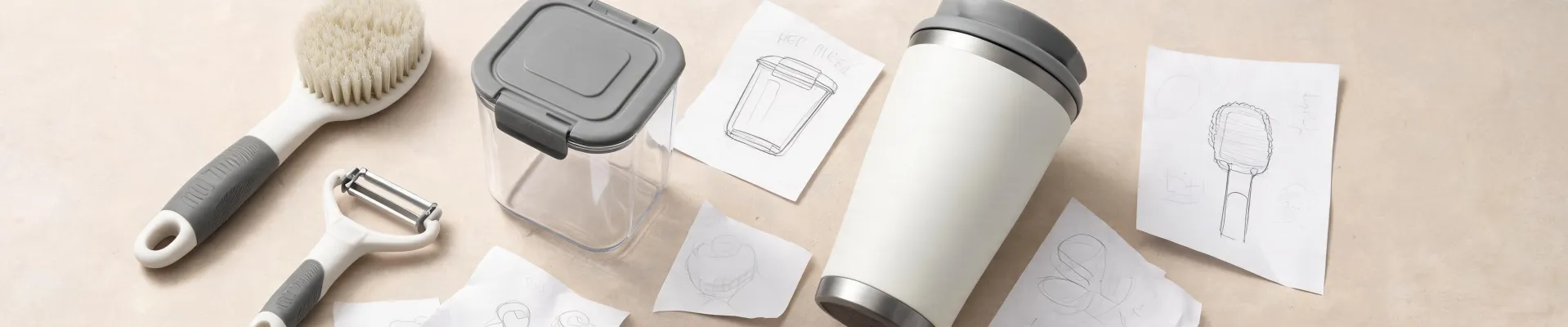
Picture a home cook standing over a drawer stuffed with mismatched spatulas, a bent whisk, and tongs that no longer close properly. The urge to replace everything with a single coordinated set is strong, and a 10-piece everyday set sounds like the obvious fix. But the choice dilemma is real: the OXO Good Grips 10-Piece Everyday Kitchen Tool Set carries a premium over generic bundles, and that price gap forces a basic question—are you paying for genuine durability or just a familiar name? OXO's own positioning points to the answer: its official site organizes the entire catalog into Good Grips, Brew, Steel, and Tot lines, with Good Grips covering the everyday tools. That structure is a deliberate signal that the brand treats grip comfort as the core design language, not an afterthought. So the real decision is not whether you need ten tools, but whether the tools you reach for most are the ones inside the box.
The Drawer Dilemma: Which 10-Piece Set Earns Its Spot?
Every home cook knows the scene: a drawer crammed with mismatched spatulas, a bent whisk, and tongs that no longer grip. The idea of replacing it all with one tidy set is tempting, and a 10-piece everyday set seems like the cure. Yet the real dilemma is the premium: the OXO Good Grips 10-Piece Everyday Kitchen Tool Set costs more than generic bundles, forcing a basic question—does that extra money buy lasting durability or just a familiar logo? OXO's own site supplies a clue: its catalog is organized into Good Grips, Brew, Steel, and Tot lines, with Good Grips covering the everyday tools. That organization signals that grip comfort is the brand's core design language, not an afterthought. So the true decision is not how many pieces you get, but whether the utensils you actually rely on are the ones in the box.
This is not a matter of counting pieces. Independent category reviews of kitchen products—including storage containers, which share the same durability concerns—consistently separate high-rated picks from also-rans by looking at how well something holds up under daily abuse. In a head-to-head comparison of OXO's own storage lines, the Good Grips tier earned a 4.7 out of 5 score while the budget SoftWorks line settled at 4.5, a gap that reflects real differences in construction and clean-up. The same pattern recurs in multiple roundups, where top-scoring products routinely cross the 4.6 threshold and mid-tier options lag behind. The lesson carries over to tools: a set that scores high on secure handles and dishwasher-safe materials will outlast a cheaper set that looks fine on the shelf. So the framework for judging any 10-piece set should start with grip comfort, then move to dishwasher safety, then tool coverage, and only then price. Those four criteria turn an emotional purchase into a manageable evaluation.
To see how that framework applies to a specific candidate, consider the OXO Good Grips 10-Piece Everyday Kitchen Tool Set. The brand's official catalog—where Good Grips, Brew, Steel, and Tot appear as separate categories—confirms that OXO has built a design system around ergonomic daily use rather than a random assortment of gadgets. The Good Grips name itself signals the priority: comfortable, secure handles that reduce hand fatigue during stirring, flipping, and lifting. What the marketing does not tell you is whether this particular 10-piece configuration matches your habits. A set can be well-built and still wrong for you if it includes three types of spatulas but no ladle, or if the pieces you use nightly are sold only as add-ons. That is why the practical test is to check the included utensils against a mental list of your five most-used tools before deciding that the set is 'everyday' for you. Without that check, a well-engineered set can still become a drawer of regrets. And a set that misses your core tools will sit unused, no matter how comfortable its handles.
The Four Criteria That Define an Everyday Set
Now that the decision frame is clear, the question becomes: what exactly should a 10-piece everyday set do for you? Category roundups that test more than 50 containers and tools keep returning to the same four criteria—grip comfort, dishwasher safety, tool coverage, and value. Grip comfort is about whether a tool stays stable in your hand when you're stirring a thick sauce or flipping a heavy pancake. Dishwasher safety determines whether the set is actually 'everyday' or a hand-wash-only hassle. Tool coverage is about whether the included utensils match your cooking routine, not just the number on the box. Value then measures whether the price is justified by the quality and the pieces you'll genuinely use. Sorting a set by these four filters immediately exposes which options are worth your money and which are merely big. And that order matters, because the most comfortable grip cannot compensate for a missing ladle.
Grip is the most important of the four, and it is the one most often ignored. A review of the Rubbermaid Brilliance pantry set—a product that earns a 4.6 rating from nearly 29,000 shoppers—credits its four-latch lid for keeping contents secure and its stain-resistant material for staying easy to clean. The same principle applies directly to kitchen tools: a spatula with a contoured, non-slip handle will not twist in your hand the way a cheap, smooth plastic one does. For everyday cooking, that difference is not a luxury; it is safety and control. If you have ever had tongs slip while lifting a hot cut of meat, you already know why grip comfort trumps almost every other feature. A set that feels secure in hand will be reached for more often, which is the true test of an 'everyday' tool. And because a comfortable grip reduces hand fatigue, cooks tend to use such tools for longer without discomfort.
Tool coverage and value go together because they both ask what you are actually paying for. Coverage means the set includes the core utensils you use nightly—a spatula, a slotted spoon, tongs, a ladle, and a whisk, for example. Value means you are not paying for redundant pieces that simply fill out the count. A 10-piece set that contains two steamer baskets and no serving spoon is a poor value for most home cooks, even if the unit price per piece looks low. The right approach is to list your top five tools before evaluating any set, then compare that list to the actual configuration. If the set matches your core list and holds up on grip and dishwasher safety, the price is secondary; if it misses one critical item, the set is incomplete no matter how well it is built. That is why piece count alone tells you almost nothing about real value. In that sense, coverage and value are two sides of the same coin: a set that misses one nightly tool forces you to spend again.
The Case for OXO Good Grips
Does OXO Good Grips actually deliver on those four criteria? The evidence from OXO's own site suggests yes—or at least that the brand is built to. The official catalog divides the lineup into Good Grips, Brew, Steel, and Tot, with Good Grips housing the everyday kitchen tools. This organization is not arbitrary: it tells you where the brand invests its design effort. A company that separates its ergonomic line from its steel and travel lines is signaling that grip and comfort are the defining features of its core utensils. When a brand structures itself around a comfort promise, the products under that name usually follow through with cushioned, non-slip handles and materials that survive frequent washing. That alignment between structure and promise is why the brand's positioning matters in the first place. The evidence is not a claim about a single tool; it is a pattern that runs across the entire product family.
The 'Good Grips' label is more than a marketing phrase; it is the design language. Across the category, the term appears in the brand's own navigation, which consistently associates Good Grips with soft, comfortable, non-slip handles on everyday tools. The practical result is that the handles are shaped for real hands—larger, cushioned, and angled to reduce strain. For a home cook who spends twenty minutes at a stove, a handle that stays put is the difference between a pleasant meal prep and a tired wrist. This is why the brand's own terminology matters: it tells you what to expect before you even pick the tool up. And because the design system applies across the lineup, a set built under this name is likely to carry that comfort into every piece. In practical terms, you should be able to feel the difference within seconds of holding a Good Grips handle.
Even with a strong brand, the specific 10-piece configuration deserves scrutiny. Look at how manufacturers handle specifications in adjacent categories: a Rubbermaid Brilliance pantry set is defined by a 7.8-cup capacity and a 4-latch lid, while another storage piece is built as a 14-Cup square with an EasyFindLids system. Those specs determine whether the product fits the intended use. The same logic applies to tool sets: the difference between a useful everyday set and a drawer full of clutter is not the brand name but the exact mix of pieces. A 10-piece set may include a carving fork you never use and omit the slotted spoon you rely on daily. So before buying, verify the configuration, not just the brand promise. The brand gets you to the right quality level; the configuration decides whether it actually solves your problem. In the case of the OXO set, the same scrutiny applies: check the included pieces against your own list before assuming the set is complete for you.
Weighing OXO Against Cheaper Alternatives
The remaining question is whether the premium OXO charges is worth it when cheaper alternatives fill the same shelf. A head-to-head comparison in the food-storage category shows the pattern: OXO's Good Grips tier scores 4.7 out of 5, while its own budget SoftWorks line scores 4.5. That 0.2-point gap may look small, but it correlates with the things that annoy owners: flimsier closures, harder cleanup, and parts that wear out faster. For kitchen tools, the equivalent trade-offs are visible in handle flex, bent shafts, and rust spots after a few months. Cheaper sets often look almost identical in product photos, which is why the decision has to rest on the criteria that separate top-rated products from mid-tier ones. The price difference, in other words, buys features that show up in daily use rather than in the box photo.
What those criteria look like in practice can be seen in the breakdown of a highly rated product. The Rubbermaid Brilliance pantry set earns a 4.6 rating from nearly 29,000 shoppers, and reviewers specifically praise its four-latch security and stain resistance. In the same way, a high-scoring tool set earns its rating from grip, easy dishwasher cleaning, and a construction that does not bend or rust. When you pay a bit more for OXO, you are mostly paying for those two things: a handle that does not slip and a finish that survives repeated washing. For a set you will use daily, that premium is easier to justify than the cost of replacing a budget set a year later. The evidence of owner satisfaction is one of the strongest signals that the extra money goes to durability, not just branding. A well-designed handle and a truly dishwasher-safe body will keep a set out of the donate bin for years.
On balance, the OXO Good Grips 10-Piece Everyday Kitchen Tool Set justifies its premium if the pieces match your cooking habits. For cooks who prepare meals most nights, the secure grip and dishwasher-safe design are exactly the features that make a tool set worth reaching for. For occasional cooks, a cheaper set may be perfectly adequate—as long as those trades are made consciously, not accidentally. The interim verdict, then, is conditional: it is a strong default for daily cooks, not an automatic buy for every kitchen. The decision should turn on whether you identify as someone who uses these tools often enough to feel the difference. If you do, the premium is a few dollars a month spread over years of use; if you do not, it is money locked in a drawer. The question is not whether OXO makes quality tools; it is whether the quality premium connects to your actual routine. A home cook who makes one elaborate meal a week may never notice the grip difference, while someone who cooks daily will feel it in every stir. That is why the verdict must stay conditional.
The 10-Piece Decision Rule
So how do you turn this comparison into a rule you can use for any set, not just this one? The first step is to separate the emotional appeal of a shiny set from the practical question of usage. A drawer full of tools only helps if the ones you need are actually there. The second step is to accept that more pieces can be a downside: every extra utensil takes up space and adds clutter, and the set that looks most complete is often the one you use least. A rule has to be simple enough to recall in the aisle and strict enough to block impulse purchases. It should also make you feel comfortable walking away from a 'good deal' that does not fit your list. The best heuristics are born from an actual scenario: you are in the store, the packaging shows twelve gleaming tools, and you have five minutes to decide.
Your reusable heuristic is straightforward: write down the five utensils you reach for every week, then compare that list with the set's contents before looking at price. Next, assess grip comfort and dishwasher safety—hold each tool, check the handle, and confirm the cleaning method. If the set includes your core five, feels solid, and is dishwasher safe, it deserves the drawer space; if a single essential tool is missing or the build feels weak, the piece count does not matter. This standard works in any store and applies directly to the OXO set: it is a strong choice for daily cooks, provided the package genuinely contains the tools you live with. With the same rule, you can confidently skip a set that looks great but does not match your list.
Here is the decision rule: list the five tools you reach for most in a typical week. Check those five against the set's configuration before you evaluate price. Then judge each candidate on grip comfort and dishwasher safety—pick them up, feel the handles, and read how they are meant to be cleaned. If the set covers your core five, feels solid in hand, and is dishwasher safe, it earns the drawer space; if it misses even one core tool or feels flimsy, the piece count is irrelevant. That rule gives you a reusable standard that will serve you in any kitchen store, and it settles the OXO question: a strong choice for daily cooks, provided the box actually contains the tools you live with. The same logic lets you walk into any store and confidently pass on a set that looks impressive but fails your personal list.