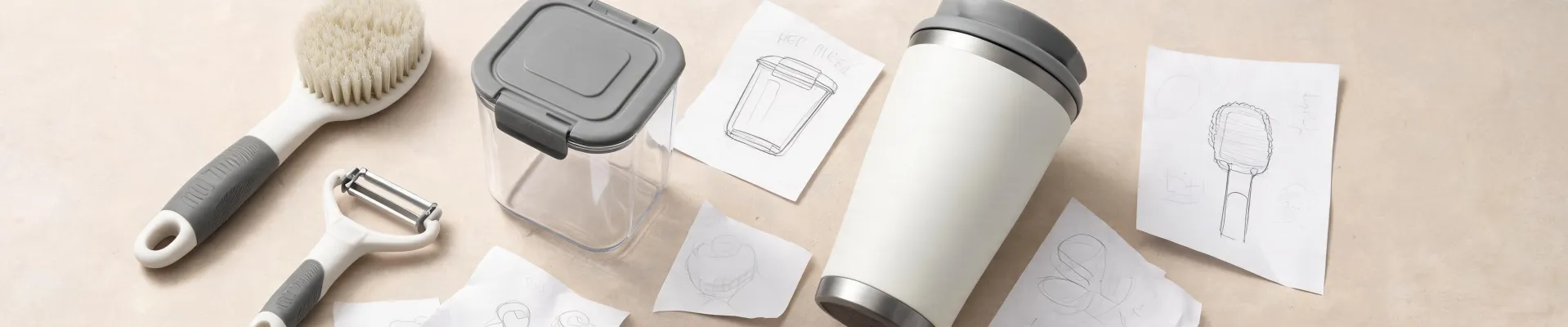
Picture the sound that finally makes you swear off cheap travel mugs: a slow, patient drip landing on your desk blotter at mid-morning. You shift the cup and a second drop finds the sleeve of your shirt before you can grab a napkin. It isn’t a dramatic failure — no lid pops, no bag floods — but it is the kind of daily friction that turns a useful 30 oz tumbler into a paperweight you carry out of habit. The usual response is to shop by color and hope for better luck. Yet the real difference between a tumbler you trust and one you babysit has less to do with insulation ratings or paint jobs than with a tiny hinge-and-seal mechanism you will operate a dozen times a day. That is the question this article keeps returning to: not which shade of Zalea looks best, but whether the lid will behave when your hands are full.
The Drip That Started the 30 oz Question
You’ve just dropped a child at school, or you are unlocking a bike while a gym bag slides off one shoulder, or you are steering with one hand and reaching for coffee with the other. In all of these moments, the old tumbler — the one with the pretty finish — fails at exactly the time you cannot give it attention. The lid needs two hands, the spout dribbles, and the wide base misses the car’s cup holder, so every braking event turns into a small flood. You end up holding the cup between your knees or burying it in a tote where it cannot spill, which defeats the entire point of carrying a 30 oz vessel. The scene repeats until you name the real enemy: it is not the cup’s size or color, it is the lid-and-seal system that decides whether one-handed, distracted use is possible. A travel tumbler that cannot be operated while your other hand is full is not a travel tumbler; it is a desk decoration with a handle.
Once the failure pattern is visible, the buying decision changes shape. Instead of asking which 30 oz metal tumbler has the most attractive finish, the useful question becomes: can I open it, sip from it, re-seal it, and set it down without ever shifting my bag or letting go of a child’s hand? The Owala FreeSip Sway 30 oz is sold as a looker — the Zalea colorway with its soft gradient is genuinely easy to like — but the actual argument should be about trust in the latching lid, the swing handle, and whether the cup fits the spaces your day really occupies. That framing alters what you compare: not insulation thickness alone and not price alone, but the hinge’s behavior when wet, when cold, when your hand is slippery, when the cup is half full and lying sideways. Once that question is on the table, the 30 oz capacity stops being a vague promise and becomes a test of whether the design can deliver water without drama.
Inside the Lid, a Classroom of Curious Testers
To understand why the Sway’s lid deserves your attention, start with what the company says about itself rather than what the bottle looks like. Owala’s educational arm describes its learning system as a set of projects tested in more than 20 schools, built for students between the ages of 6 and 15, with 55 percent of the advisory team holding a master’s degree or higher. The organization’s own pages use words like self-driven, inquiry-based, and “hard core science,” and they frame the child as a researcher rather than a listener. That background matters because it reveals a design temperament: this is a company that believes people learn by bumping into problems and solving them, not by being handed a finished answer. Apply that temperament to a 30 oz tumbler and you expect the engineering to come from watching real hands fail — a thumb slipping on a wet latch, a bag knocking the cup sideways — instead of from a CAD model that looks good in a render.
The philosophy is explicit in the founder-level material: the learning system has been recognized by outside institutions, with the founder invited to speak at a UNESCO project-based-learning summit and to serve as an instructor in a national teacher-training program. The team’s own manifesto goes further — it refuses to hand over answers, argues that girls deserve the same encouragement in science as boys, and says the most important thing it teaches is the desire to learn, followed by the method for learning. These are not abstract slogans; they describe a culture that expects early attempts to fail and treats those failures as necessary data. In practice, that means tolerating a higher number of early misfires than a cosmetic-first brand would, because the goal is long-term reliability rather than a flawless first impression. A lid designed in this culture is unlikely to be abandoned after one bad prototype; instead, the engineering team probably observed how different thumbs hit the release, how bags squash the lid, how condensation makes a seal slippery, and then adjusted the mechanism until the failure rate fell into an acceptable range.
Some of the most telling evidence sits in the parent testimonials the company chose to publish. One mother jokes that her son arrives an hour early and has to be dragged home; another says the repeated failures during a build were what made the eventual success thrilling. In the same material, the brand states its priority: students should leave with the drive to learn and the know-how to learn—then the program steps back. Translate that into a travel cup: the Sway’s latch is designed to be learned, not to be perfect on the first squeeze. If you expect zero drips while you are half-asleep and balancing a laptop, you are asking the lid to bypass the trial stage that the brand treats as essential. Spend a few deliberate days opening and closing it one-handed, and the mechanism will meet you halfway; skip that stage, and any new latch will feel like a betrayal.
30 oz in the Commuter Bag vs. the Office Sink
Consider two versions of the same person. On a heavy travel day, you leave the house in the morning for school drop-off, then drive to a client site, walk through a parking garage, sit through a meeting, and head to the gym before returning home. In that arc, a sink is never close, and refills are a luxury. A 30 oz bottle is not a burden; it is the difference between one fill lasting the morning or running out at the worst moment, usually while you are buckled into a driver’s seat. On a desk-bound day, the same bottle sits close to a kitchen tap, and every refill takes only two steps. For that day, the larger capacity adds weight and width without adding value. You feel it when you swing the bottle onto your desk and when you carry it into a meeting that could have been a short walk. The ergonomic cost is subtle but constant: a heavier cup must be lifted, tilted, and re-sealed dozens of times, and a desk user pays that cost all day long. The Sway cannot be both the ideal field bottle and the lightest desk ornament; the choice depends on which version of your day shows up more often.
Consider the original meaning of the name. A public encyclopedia entry describes Owala as a stream in Ifon Osun, Nigeria, that runs about 7 km (4.3 mi) and has long been used for dam-building and irrigation because the surrounding soil is fertile. A river earns its usefulness not by being scenic but by carrying water to the fields that need it, hour after hour, without losing the flow to the ground. The Sway 30 oz is trying to be that kind of channel for your day. The tapered base is what lets it drop into a standard cup holder, and the weight has been distributed so it doesn’t tip when you brake. That profile is a condition, not a preference: if your day involves parking lots, school gates, train stations, and a gym bag, then the 30 oz Sway’s geometry pays off. The people who will actually drink from this cup between errands get the benefit immediately; the passive sipper pays a weight tax for a feature they never use. If your day is mostly one desk, the same channel is more than you need.
So the differentiator is not the size; it is whether the cup can be operated while you are in motion. The Sway is built around a one-hand maneuver: the handle is attached to the lid, your thumb lands on the push-button, and a single squeeze opens the spout before you even lift the cup. You can hold a child’s hand, keep your other arm around a grocery bag, and still take a sip without setting anything down or using a counter. The wide mouth gives ice cubes room and lets a slim brush reach the bottom, and the exterior stays dry enough to grip after an hour in a warm car. These are small advantages by themselves, but together they separate a cup designed for a commute from a cup designed for a shelf. When you compare the Sway against another 30 oz cylinder, stop looking at colorways and start asking whether the competing lid can perform that same no-counter, no-lap, one-handed sip. That challenge will tell you more than any finish swatch ever will.
The 6-in-100 Lesson from Parent Testimonials
You don’t have to take the manufacturer’s word for it; the brand’s own community pages supply the more honest story. One parent describes a Rube Goldberg team that faced the hardest build: the students tried 100 times and succeeded only 6 times, but they did not quit, and their final success rate climbed to nearly 30 percent. Another page of parent comments makes the same point about method: school science often hands students a conclusion, whereas Owala’s approach leaves room for the mess of repeated attempts. That evidence matters because it recasts the first week with any new lid. Your first Sway sip might produce a dribble; your first drop into a bag might make the seal shift. Those moments are not a verdict on the bottle — they are stage one of the learning curve, the same stage the Goldberg team pushed through. The product’s long-term reliability, like the team’s 30 percent, is built by repeating the motion until the mechanism and your thumb agree.
The brand’s philosophy goes further: it withholds answers on purpose, because the struggle to solve is where learning happens; the rest is the learner’s own. Apply that to a lid and the instruction becomes clear. Spend the first week deliberately opening and closing the Sway with one hand — while you walk, while you hold a bag, while the cup is cold and your hand is wet. Put it in a backpack on its side and see how the seal behaves. Treat each unintended leak as data, not as proof of failure. A latch that is trusted after deliberate practice is far more valuable than one that looks perfect in the store but fails you on day three. This mental model also prevents overreaction: once you know the mechanism is meant to be learned, a single spill no longer destroys your faith in the bottle.
Back to That Morning Drip
Remember the drip that opened this article? Imagine the same morning six months later. You grab the Sway by its swing handle, press the button with your thumb, take a sip while you are still pulling a backpack over one shoulder, and set it into the car’s cup holder without looking. There is no two-hand waltz, no search for a dry counter, no sleeve-check for a wet line. The improvement is not in insulation claims or in a prettier colorway; it is in the absence of the old micro-drama. You stop monitoring the cup and start drinking from it. That is the kind of change that makes a 30 oz bottle feel smaller, because you are no longer carrying it as a burden — you are simply carrying water the way the original, literal Owala carried water: quietly, continuously, and in the direction you need it to go.
But the verdict has clear boundaries. If you live out of a backpack, a car, and a gym locker, the Owala FreeSip Sway 30 oz is an easy recommendation; the latch, handle, and cup-holder profile remove the anxiety that made your old travel mug leak into bag seams and shirt collars. If, however, you are someone who never leaves a single desk for eight hours, the same bottle is simply heavier than it needs to be — and you can find a smaller, lighter vessel without the hinge complexity. The stream that gave Owala its name flows for 7 km (4.3 mi) because that is the useful distance for the fields it irrigates; in the same way, the Sway’s 30 oz capacity has a particular useful distance. It is for the route that runs through school gates, crosswalks, and parking lots, not for the walk from your keyboard to the kitchen sink. Buy it for those moving days, and you are buying a channel you can trust. Buy it for a life that never moves, and you are buying a beautiful object that will sit there, silent and dripless, waiting for the commute you don’t have.
And when you no longer hear that drip — when the only click is the lid seating under your thumb — the case is closed.