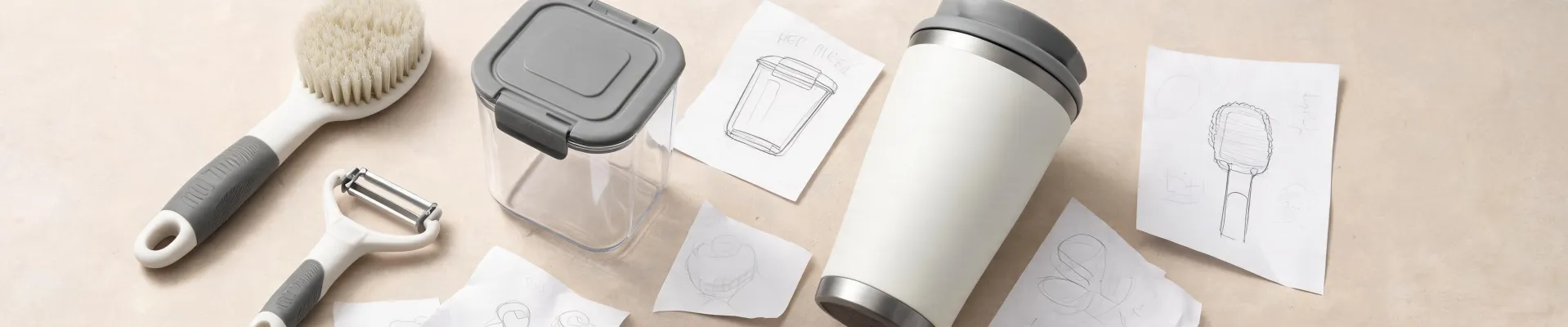
You are packing a daycare bag at 6:40 in the morning, three 2 oz containers of sweet potato puree lined up on the counter, and you have to decide which container system goes into the bag. One side holds an OXO Tot Baby Block with a single-button lid that pops open the instant you press it, which is ideal when one hand is busy with a spoon and the other is steadying a wriggling baby. The other side holds a small Rubbermaid Brilliance-style container with four latches that click down one by one; it takes two hands and a few extra seconds to open, but once sealed it does not leak when the bag gets tossed onto the car seat. That is the real choice here. It is not about brand loyalty or which set looks better on the shelf. It is about matching the lid mechanism to how you actually carry, reheat, and serve those 2 oz portions.
Two 2 oz Containers, One Choice
You are packing a daycare bag at 6:40 in the morning, three 2 oz containers of sweet potato puree lined up on the counter, and you have to decide which container system goes into the bag. One side holds an OXO Tot Baby Block with a single-button lid that pops open the instant you press it, which is ideal when one hand is busy with a spoon and the other is steadying a wriggling baby. The other side holds a small Rubbermaid Brilliance-style container with four latches that click down one by one; it takes two hands and a few extra seconds to open, but once sealed it does not leak when the bag gets tossed onto the car seat. That is the real choice here. It is not about brand loyalty or which set looks better on the shelf. It is about matching the lid mechanism to how you actually carry, reheat, and serve those 2 oz portions.
The comparison sources worth trusting tend to rate these two brands for different jobs. In a 2026 head-to-head roundup from Clever Home Storage, the OXO Good Grips POP Container Set earned 4.7/5 for dry pantry goods like flour, sugar, cereal, rice, and snacks, while the Rubbermaid Brilliance Food Storage Set also earned 4.7/5 but for leftovers, meal prep, soups, sauces, and fridge storage. Neither number says 'this brand is better for baby food.' What the two ratings say is more useful: each container system leads in a different use case, and the seal has to fit the way you store and move food. When it comes to 2 oz baby portions, the relevant comparison axes are seal mechanism, lid storage, capacity fit, and cleaning behavior. The rest of this article walks those axes with the 2 oz puree routine in mind, not pantry shelves or full-size leftovers.
Why 2 oz? Capacity and Use Cases
Category reviews of food storage containers make one point repeatedly: when a container has to travel, leakproofing is the top criterion. In its 2026 tested roundup, Serious Eats puts the Rubbermaid Brilliance line at the top and notes that the lids 'snap on securely and firmly,' with no signs of cracking over time. That kind of seal matters for 2 oz puree portions because those small containers rarely stay on a shelf. They sit in a diaper bag, get pressed by a water bottle, and ride in a car for an hour before lunch. The 2 oz size matches the early puree stage: enough for a first meal, small enough to freeze in individual cubes, and light enough that the lid is doing most of the protective work. Capacity is not the differentiator; the lid is.
Here is the condition that makes 2 oz the right size: your baby is between the first spoonfuls and the transition to 4 oz meals. At that stage, a 2 oz container holds one feeding without forcing you to reheat a half-used jar, and it fits the small insulated pocket of a lunch bag. If your baby already eats 4 to 6 oz at a sitting, two 2 oz containers work for a day out, but you will be opening twice as many lids, which makes the one-hand lid more attractive. If you mostly freeze puree in ice cube trays and transfer cubes later, the container is doing a different job entirely. So define the routine first: how often the container travels, how often it is opened, and whether it is reheated in the microwave. The right 2 oz container is the one that fits that pattern.
Rubbermaid's own food storage catalog shows why 2 oz is a niche within a larger system, not a standalone product. The site lists dozens of options — 24 of 73 results on one page — with capacities ranging from 0.5 cup to 2.25 quarts, and materials split among glass, plastic, and Tritan plastic. The Rubbermaid Brilliance 10-Piece Set, billed as leak-proof and clear, carries a 4.5 rating across 1,627 reviews. What that range tells a parent is practical: you can buy a small 2 oz-style container for puree now and add larger sizes later without switching systems. The small containers are not a dead end; they are the entry point to a line that scales as portions grow.
Seal Quality: Where the 2 oz Containers Differ
The first thing to drop is the assumption that all BPA-free small containers seal the same way. A 2026 roundup that tested more than 50 food storage containers across glass, stainless steel, and plastic found plenty of BPA-free options that kept food fresh for days, but the phrase 'when sealed properly' appeared in the results, and that is exactly where baby food containers diverge. The seal is a mechanism, not a material property. OXO's small containers use a one-button lid that releases around the whole perimeter at once. Rubbermaid's Brilliance small containers use four individual latches. Both are BPA-free. Both are marketed as leakproof. The difference shows up in the conditions: how hard you press, how new the gasket is, and whether the lid is fully seated before the container goes into the bag. I would weigh the four-latch system more heavily if the container leaves the house every day.
The condition that should decide between the two lid systems is simple: does the container travel, or does it stay put? If you pack three 2 oz containers in the morning and the bag gets tossed onto the passenger seat, dropped in the daycare cubby, and carried by the handle on a walk, the four-latch system earns its extra seconds. Each latch distributes the clamping force, so a hard knock on one corner does not pop the whole lid. If the container mostly sits in the fridge and is opened six or seven times a day for spoonfuls, the single-button lid saves real time; you can press and lift with the same hand that is steadying the baby's head. The mistake is buying the more secure lid for a stay-at-home routine, or the faster lid for a commute-heavy one.
The four-latch approach gets its most direct endorsement from a 2026 review of the Rubbermaid Brilliance 10-Piece Pantry Set, which holds a 4.6 rating across 28.9k Amazon ratings. The review is explicit: the four-latch system is 'more secure than single-button designs for transport.' It also flags the trade-off: the latches 'can be stiff when new' and loosen after a few months of use. For a 2 oz puree routine, that timeline is worth knowing. A brand-new set may require two thumbs and a countertop to close; by the time your baby moves to finger foods, the same latches will close with one pass. The material is BPA-free Tritan plastic, dishwasher safe, and microwave safe without the lid, which matters when you reheat a frozen cube at lunch.
Stacking and Lid Storage: Where Small Containers Diverge
Lid management is a bigger deal in a 2 oz set than in a full-size set, because the lids are small and identical. Rubbermaid's EasyFindLids system shows one solution: the lid snaps onto the container base and onto other same-size lids, so the right lid stays with the right container or stacks into a tidy lid tower. The product page for the 14-cup square container, rated 4.4 across 23 reviews, describes the system as finding 'the right lid, right now,' and notes that the square shape nests easily to save fridge space. For baby food, the same principle applies at a smaller scale: if the lid attaches to the base when the container is open, you are less likely to lose it under a high chair.
The condition for caring about lid storage is how often you assemble the set. Parents who pack three containers every morning feel the difference in seconds: with a nesting design, the lids ride on top of the stack, so nothing rolls into the bottom of the bag. Parents who store containers in a drawer between uses feel it differently; a lid that snaps to other lids keeps the group together, while loose lids scatter behind the forks and spatulas. The same logic applies in the fridge. Stacked 2 oz containers take up one shelf slot; unstacked ones consume twice the footprint. Neither approach is objectively better, but the choice affects your morning routine, and it is worth checking how the lids behave when the container is empty.
Put the two systems side by side and the decision rule becomes concrete. Choose the one-button OXO-style lid when the container is opened more than it travels: home feeding, fridge storage, reheating in the microwave, and quick rinses between servings. Choose the four-latch Rubbermaid-style lid when the container travels more than it is opened: daycare lunches, car trips, stroller pockets, and anything packed before sunrise. A useful test: run your actual day in your head. If the image that comes up is a hand pressing a single button while the other hand holds the baby, you already know the answer. If the image is a bag being swung onto a shoulder with three small containers inside, the answer is the opposite.
Material and Cleaning: What BPA-Free Actually Means
BPA-free is the price of entry, not a feature. Rubbermaid's own food storage catalog lists glass, plastic, and Tritan plastic as separate material options, and the word 'clear' is in the Brilliance set's name, but nothing on the page treats BPA-free as a differentiator, because it is standard across the category. What the material choice actually changes is weight, clarity, and how the container handles heat and staining. Clear Tritan plastic is light enough for a diaper bag and lets you check whether the puree has separated without popping the lid. Glass is heavier and more fragile, which is why it rarely appears in small carry sets. At the 2 oz baby-food scale, plastic dominates for a simple reason: it survives the bag, the freezer, and a drop onto the kitchen floor.
The cleaning condition is where the two systems feel most different in practice. The four-latch design has more corners for puree to hide in: the latch wells, the gasket channel, and the hinge points all need attention when you rinse after every meal. The one-button design has fewer crevices, which is one reason it is popular for frequent feeding. Most small food storage containers in this class are dishwasher safe on the top rack, and the Tritan Brilliance line is microwave safe without the lid, so reheating a thawed 2 oz portion is fine as long as you remove the lid or leave it ajar. Freezer use is straightforward for both, but fill to about three-quarters to leave room for expansion. If your routine relies on quick hand-washing between servings, the simpler lid wins.
The head-to-head comparison that opened this article closes with the same conclusion from a different angle. Its May 19, 2026 update gives the OXO Good Grips POP Container Set 4.7/5 for dry pantry goods, the Rubbermaid Brilliance Food Storage Set 4.7/5 for leftovers and fridge storage, and the OXO SoftWorks line 4.5/5 as a budget everyday option. Two brands, matching scores, different assignments. For a parent, the practical reading is that neither manufacturer is 'better' at small containers; each one built its seal system for a different moment in the kitchen. The single-button lid is built for speed; the four-latch lid is built for travel. Which of those moments describes your 2 oz routine is the only question that matters.
The Verdict: Match the Lid to Your Routine
Here is the verdict, and it is a conditional one. For 2 oz baby food portions, the OXO Tot Baby Blocks-style one-button lid is the better container when your day is built around opening: home meals, fridge runs, and three or four reheats. The Rubbermaid Brilliance-style four-latch system is the better container when your day is built around carrying: daycare bags, car seats, and stroller hooks. The evidence supports both calls. Rubbermaid Brilliance carries 4.7/5 for meal prep and leftovers in the comparison roundup and 4.6 across 28.9k ratings in its own review, with the explicit note that four latches are more secure for transport. OXO's POP set matches that 4.7/5 for pantry use. The scores do not pick a winner; the routine does.
The boundary conditions matter as much as the verdict. The four-latch container fails you when the baby is hungry and your other hand is already occupied; a stiff new set can require a countertop and two thumbs, and that friction happens exactly when patience is shortest. The one-button container fails you when the bag gets thrown from the car to the sidewalk; a single release point is easier to pop open by accident under pressure. There is also a volume boundary. Once your baby moves past the 2 oz stage, the small containers become snack cups, and the lid system that annoyed you at 6 months may be exactly what you want at 18 months for a car snack. The rule is to buy for the routine you have now, not the one you expect in six months, and the 2 oz container you choose will still be earning its place.
The 6:40 a.m. packing scene decides it: if the container has to survive the car ride, four latches; if it has to survive the feeding chair, one button.